Skip to Content
logo

Docs

  • Home
  • Quick start
    • FAQ
      • Billing
      • Integrations
      • Platform
      • Scanner
      • Ask our pentesters to explain a vulnerability
      • Fix code with gen AI from the IDE
      • See safe dependency versions
      • Import repositories to test
      • Invite team members to sign up
      • Billing the Advanced plan
      • Continuous Hacking free trial, plans and pricing
      • Continuous Hacking methodology
      • Continuous Hacking PoV
      • CVSSF metric
      • Glossary
      • Main website
      • Platform demo
      • Tutorial videos
      • What is DAST?
      • What is SAST?
      • What is SCA?
      • Assign vulnerability remediation to a team member
      • See details of the reported security vulnerabilities
    • Sign up to Fluid Attacks
      • Break the build
      • Install CI Gate to break the build
      • Verify whether a fix was successful
  • Find and fix
    • Use the platform
        • Sign-up and login
        • Interface and sections
        • Groups section
        • Group configuration
        • Create and delete groups
        • Create another organization
        • Portfolios
        • ToE and SBOM
        • Register payment method
        • Members
        • Understand roles
        • Group authors
        • Organization authors
        • Repositories
        • Import them with OAuth
        • Repositories out of scope
        • Credentials
        • Environments
        • Resolve events
        • Vulnerabilities section
        • Examine evidence
        • Supply chain analysis
        • Reachability analysis
        • Vulnerability signature
        • CVSS score adjustment
        • Correlate threat models
        • Assign treatments
        • Assigned to you
        • Verify with reattacks
        • False positive requests
      • Help options
        • AI Agent
        • Live chat
        • Email
        • Comments
        • Talk to a Pentester
        • Tutorial videos or demo
        • Vulnerability reporting
        • Standard compliance
        • ZTNA logs
        • Recent downloads
        • Common analytics
        • Organization analytics
        • Group analytics
        • Portfolio analytics
        • Chart options
        • CI Gate configuration
        • CI Gate executions
        • Security gates
        • Vulnerability acceptance
        • Prioritization attributes
        • Explore the user menu
        • Enable and disable notifications
        • Subscribe to News
        • Leave a group
        • Fluid Attacks' scanners
        • OWASP Benchmark results
        • Your feedback
      • Use the scanners
        • Local run
        • CI/CD integration
        • Understanding outputs
        • Findings exclusion
      • Use a configuration file
        • SAST scanner
        • SCA scanner
        • DAST scanner
        • APK scanner
      • Automatic remediation
      • Custom remediation guides
    • Fix SCA vulnerabilities
      • Javascript
      • Python
      • Kotlin
      • Introduction to Sorts
      • Sorts user guide
      • Connection mechanisms
      • Cloud connection
      • Egress connection
      • Connector connection
      • Types of authentication
      • AWS CodeCommit
    • Service-level agreement
      • Availability SLA
      • Response SLA
      • Accuracy SLA
      • False negatives
      • False positives
      • Scope
    • Support information
      • Changelog
        • 2023
        • 2024
        • 2025
        • 2026
      • Roadmap
      • AI functions
      • Attack surfaces
      • Binaries
      • Browsers
      • CI/CD
      • CVEs for reachability
      • Evidence formats
      • Frameworks
      • IDE functionalities
      • Languages
      • Languages for fixes
      • Package managers
      • Remediation
      • SCM systems
      • Secrets
      • Standards
      • Ticketing systems
      • Documentation sections
  • Integrations
      • Bug-tracking systems
      • Tools and integrations
      • Install
      • Setup
      • Issue creation
      • Automatic issue creation
      • Link vulnerabilities
      • Vulnerability details
      • Request reattacks
      • Help options
    • Azure DevOps
    • GitLab
    • VS Code
      • Functions
      • Troubleshooting
      • Install the IntelliJ IDEA plugin
      • Identify and fix vulnerabilities from IntelliJ
      • Identify and address vulnerabilities from Cursor
      • Install the Cursor extension
      • AWS Marketplace integration
    • MCP server
      • Installation
      • Capabilities and use cases
      • Docker installation
    • Peer Reviewer Assistant
      • For GitLab
      • For Azure DevOps
      • Troubleshooting
      • File exclusion
    • API
      • Learn the basics
    • Webhooks
  • Stack
      • Bash
      • Python
      • Terraform
      • TypeScript
      • Ariadne
      • Commitlint
      • D3
      • Docker
      • ESLint
      • GraphQL
      • Hypercorn
      • Kubernetes
      • Labels
      • Mypy
      • Nix Flakes
      • Platform audit logs
      • Platform authentication
      • Platform authorization
      • Pydantic
      • Pydantic AI
      • React
      • Ruff
      • Sops
      • Starlette
      • Tree-sitter
      • Visual Studio Code
      • AWS
      • Batch
      • Bedrock
      • BigCodeBench
      • BugSnag
      • Checkly
      • Claude 3.5 Sonnet
      • Cloudflare
      • CloudWatch
      • Cost Management
      • Datadog
      • dbt
      • DynamoDB
      • EBS
      • EC2
      • EKS
      • ELB
      • Engineering metrics
      • ePayco
      • EventBridge
      • GitLab
      • GitLab CI
      • Google Workspace
      • IAM
      • Jamf
      • KMS
      • Lambda
      • LogRocket
      • Okta
      • OpenAI
      • OpenSearch
      • Organizations
      • QuickSight
      • S3
      • SageMaker
      • Snowflake
      • Statuspage
      • Step Functions
      • Stripe
      • Treli
      • Ubiquiti
      • Vanta
      • Voyage AI
      • VPC
      • VPN
      • Zoho One
      • Zoho Sign
    • Pentesting tools
  • Compliance
    • Authentication
      • Clients
      • Password policies
      • Staff
    • Authorization
      • Access revocation
      • Clients
      • Employee termination
      • Endpoints
      • Secret rotation
      • Sessions
      • Staff
    • Availability
      • Distributed apps
      • Distributed firewall
      • Everything backed up
      • Multiple zones
      • Recovery objective
    • Confidentiality
      • Device (re)enrolling
      • Direct hiring
      • Encryption at rest
      • Encryption in transit
      • No personal gain
      • Personnel NDA
      • Secure deletion
    • Integrity
      • Applicant evaluation
      • Awareness
      • Certification Hub
      • Certified cloud provider
      • Certified security analysts
      • Comprehensive reporting
      • Developing for integrity
      • Monitoring
      • Production data isolation
      • Secure emails
      • SLSA compliance
      • Standard timezone
      • Static website
      • Training plan
    • Non-repudiation
      • Everything as code
      • Extensive logs
    • Privacy
      • Data privacy policy
      • Data retention policy
      • Data use policy
      • Email obfuscation
      • Time tracking
      • Manual for the NDR
      • Subprocessor OpenAI
      • OTR messaging
      • Polygraph tests
      • Project pseudonymization
      • Data transmission
      • Unsubscribe email
      • Use of cookies
    • Resilience
      • Continuity and recovery
      • Equipment and telecommuting
      • Everything is decentralized
      • Redundant roles
    • Transparency
      • Complaint management
      • Data leakage policy
      • Ethics hotline
      • Help channel
      • Incident management
      • Information security responsibility
      • Open source
      • Quality policy
      • Status page
      • Testing our technology
      • Vulnerability releasing
  • Compare
    • 42Crunch
    • 7 Way Security
    • Aikido
    • Anvil Secure
    • Apiiro
    • AppCheck
    • Appdome
    • Appknox
    • Aqua Security
    • Armorcode
    • Armosec
    • Arnica
    • Astra
    • Backslash
    • Base4
    • Bishop Fox
    • Black Duck
    • Black Hills
    • Breachlock
    • Bright Security
    • Burp Suite
    • Checkmarx
    • CloudGuard
    • Cobalt
    • Codacy
    • Conviso
    • Cure53
    • Cycode
    • Cyscope
    • Cyver
    • Data Theorem
    • DataDog
    • DeepSource
    • DefectDojo
    • Detectify
    • Devel
    • Dynatrace
    • Edgescan
    • Endor Labs
    • Evolve Security
    • Faraday Security
    • FortiDevSec
    • Fortify
    • GitHub Advanced Security (GHAS)
    • Ghost Security
    • GitLab Ultimate
    • GuardRails
    • HackerOne
    • Hackmetrix
    • Hadrian
    • HCL AppScan
    • Heeler
    • Hopper Security
    • ImmuniWeb
    • Inspectiv
    • Intigriti
    • Intruder
    • Invicti
    • JFrog
    • Jit
    • Kiuwan
    • Legit Security
    • Mandiant
    • Mend
    • Mindgard
    • Mobb
    • Moderne
    • NetSPI
    • NowSecure
    • Nucleus Security
    • Oligo Security
    • Orca Security
    • Oversecured
    • OX Security
    • Phoenix Security
    • PlexTrac
    • Praetorian
    • Prancer
    • Prisma Cloud
    • Probely
    • Prowler
    • ReversingLabs
    • RunSybil
    • RunZero
    • Safety
    • Securitum
    • Seemplicity
    • Semgrep
    • Snyk
    • Socket
    • SonarQube
    • Sonatype Lifecycle
    • SOOS
    • StackHawk
    • Strike
    • Synacktiv
    • Tenable Nessus
    • Theori
    • ThreatModeler
    • Veracode
    • White Jaguars
    • Wiz
    • Xygeni
    • YesWeHack
    • ZAP
    • ZeroPath

  • Log in to the platform 
  • Home
  • Quick start
    • FAQ
      • Billing
      • Integrations
      • Platform
      • Scanner
      • Ask our pentesters to explain a vulnerability
      • Fix code with gen AI from the IDE
      • See safe dependency versions
      • Import repositories to test
      • Invite team members to sign up
      • Billing the Advanced plan
      • Continuous Hacking free trial, plans and pricing
      • Continuous Hacking methodology
      • Continuous Hacking PoV
      • CVSSF metric
      • Glossary
      • Main website
      • Platform demo
      • Tutorial videos
      • What is DAST?
      • What is SAST?
      • What is SCA?
      • Assign vulnerability remediation to a team member
      • See details of the reported security vulnerabilities
    • Sign up to Fluid Attacks
      • Break the build
      • Install CI Gate to break the build
      • Verify whether a fix was successful
  • Find and fix
    • Use the platform
        • Sign-up and login
        • Interface and sections
        • Groups section
        • Group configuration
        • Create and delete groups
        • Create another organization
        • Portfolios
        • ToE and SBOM
        • Register payment method
        • Members
        • Understand roles
        • Group authors
        • Organization authors
        • Repositories
        • Import them with OAuth
        • Repositories out of scope
        • Credentials
        • Environments
        • Resolve events
        • Vulnerabilities section
        • Examine evidence
        • Supply chain analysis
        • Reachability analysis
        • Vulnerability signature
        • CVSS score adjustment
        • Correlate threat models
        • Assign treatments
        • Assigned to you
        • Verify with reattacks
        • False positive requests
      • Help options
        • AI Agent
        • Live chat
        • Email
        • Comments
        • Talk to a Pentester
        • Tutorial videos or demo
        • Vulnerability reporting
        • Standard compliance
        • ZTNA logs
        • Recent downloads
        • Common analytics
        • Organization analytics
        • Group analytics
        • Portfolio analytics
        • Chart options
        • CI Gate configuration
        • CI Gate executions
        • Security gates
        • Vulnerability acceptance
        • Prioritization attributes
        • Explore the user menu
        • Enable and disable notifications
        • Subscribe to News
        • Leave a group
        • Fluid Attacks' scanners
        • OWASP Benchmark results
        • Your feedback
      • Use the scanners
        • Local run
        • CI/CD integration
        • Understanding outputs
        • Findings exclusion
      • Use a configuration file
        • SAST scanner
        • SCA scanner
        • DAST scanner
        • APK scanner
      • Automatic remediation
      • Custom remediation guides
    • Fix SCA vulnerabilities
      • Javascript
      • Python
      • Kotlin
      • Introduction to Sorts
      • Sorts user guide
      • Connection mechanisms
      • Cloud connection
      • Egress connection
      • Connector connection
      • Types of authentication
      • AWS CodeCommit
    • Service-level agreement
      • Availability SLA
      • Response SLA
      • Accuracy SLA
      • False negatives
      • False positives
      • Scope
    • Support information
      • Changelog
        • 2023
        • 2024
        • 2025
        • 2026
      • Roadmap
      • AI functions
      • Attack surfaces
      • Binaries
      • Browsers
      • CI/CD
      • CVEs for reachability
      • Evidence formats
      • Frameworks
      • IDE functionalities
      • Languages
      • Languages for fixes
      • Package managers
      • Remediation
      • SCM systems
      • Secrets
      • Standards
      • Ticketing systems
      • Documentation sections
  • Integrations
      • Bug-tracking systems
      • Tools and integrations
      • Install
      • Setup
      • Issue creation
      • Automatic issue creation
      • Link vulnerabilities
      • Vulnerability details
      • Request reattacks
      • Help options
    • Azure DevOps
    • GitLab
    • VS Code
      • Functions
      • Troubleshooting
      • Install the IntelliJ IDEA plugin
      • Identify and fix vulnerabilities from IntelliJ
      • Identify and address vulnerabilities from Cursor
      • Install the Cursor extension
      • AWS Marketplace integration
    • MCP server
      • Installation
      • Capabilities and use cases
      • Docker installation
    • Peer Reviewer Assistant
      • For GitLab
      • For Azure DevOps
      • Troubleshooting
      • File exclusion
    • API
      • Learn the basics
    • Webhooks
  • Stack
      • Bash
      • Python
      • Terraform
      • TypeScript
      • Ariadne
      • Commitlint
      • D3
      • Docker
      • ESLint
      • GraphQL
      • Hypercorn
      • Kubernetes
      • Labels
      • Mypy
      • Nix Flakes
      • Platform audit logs
      • Platform authentication
      • Platform authorization
      • Pydantic
      • Pydantic AI
      • React
      • Ruff
      • Sops
      • Starlette
      • Tree-sitter
      • Visual Studio Code
      • AWS
      • Batch
      • Bedrock
      • BigCodeBench
      • BugSnag
      • Checkly
      • Claude 3.5 Sonnet
      • Cloudflare
      • CloudWatch
      • Cost Management
      • Datadog
      • dbt
      • DynamoDB
      • EBS
      • EC2
      • EKS
      • ELB
      • Engineering metrics
      • ePayco
      • EventBridge
      • GitLab
      • GitLab CI
      • Google Workspace
      • IAM
      • Jamf
      • KMS
      • Lambda
      • LogRocket
      • Okta
      • OpenAI
      • OpenSearch
      • Organizations
      • QuickSight
      • S3
      • SageMaker
      • Snowflake
      • Statuspage
      • Step Functions
      • Stripe
      • Treli
      • Ubiquiti
      • Vanta
      • Voyage AI
      • VPC
      • VPN
      • Zoho One
      • Zoho Sign
    • Pentesting tools
  • Compliance
    • Authentication
      • Clients
      • Password policies
      • Staff
    • Authorization
      • Access revocation
      • Clients
      • Employee termination
      • Endpoints
      • Secret rotation
      • Sessions
      • Staff
    • Availability
      • Distributed apps
      • Distributed firewall
      • Everything backed up
      • Multiple zones
      • Recovery objective
    • Confidentiality
      • Device (re)enrolling
      • Direct hiring
      • Encryption at rest
      • Encryption in transit
      • No personal gain
      • Personnel NDA
      • Secure deletion
    • Integrity
      • Applicant evaluation
      • Awareness
      • Certification Hub
      • Certified cloud provider
      • Certified security analysts
      • Comprehensive reporting
      • Developing for integrity
      • Monitoring
      • Production data isolation
      • Secure emails
      • SLSA compliance
      • Standard timezone
      • Static website
      • Training plan
    • Non-repudiation
      • Everything as code
      • Extensive logs
    • Privacy
      • Data privacy policy
      • Data retention policy
      • Data use policy
      • Email obfuscation
      • Time tracking
      • Manual for the NDR
      • Subprocessor OpenAI
      • OTR messaging
      • Polygraph tests
      • Project pseudonymization
      • Data transmission
      • Unsubscribe email
      • Use of cookies
    • Resilience
      • Continuity and recovery
      • Equipment and telecommuting
      • Everything is decentralized
      • Redundant roles
    • Transparency
      • Complaint management
      • Data leakage policy
      • Ethics hotline
      • Help channel
      • Incident management
      • Information security responsibility
      • Open source
      • Quality policy
      • Status page
      • Testing our technology
      • Vulnerability releasing
  • Compare
    • 42Crunch
    • 7 Way Security
    • Aikido
    • Anvil Secure
    • Apiiro
    • AppCheck
    • Appdome
    • Appknox
    • Aqua Security
    • Armorcode
    • Armosec
    • Arnica
    • Astra
    • Backslash
    • Base4
    • Bishop Fox
    • Black Duck
    • Black Hills
    • Breachlock
    • Bright Security
    • Burp Suite
    • Checkmarx
    • CloudGuard
    • Cobalt
    • Codacy
    • Conviso
    • Cure53
    • Cycode
    • Cyscope
    • Cyver
    • Data Theorem
    • DataDog
    • DeepSource
    • DefectDojo
    • Detectify
    • Devel
    • Dynatrace
    • Edgescan
    • Endor Labs
    • Evolve Security
    • Faraday Security
    • FortiDevSec
    • Fortify
    • GitHub Advanced Security (GHAS)
    • Ghost Security
    • GitLab Ultimate
    • GuardRails
    • HackerOne
    • Hackmetrix
    • Hadrian
    • HCL AppScan
    • Heeler
    • Hopper Security
    • ImmuniWeb
    • Inspectiv
    • Intigriti
    • Intruder
    • Invicti
    • JFrog
    • Jit
    • Kiuwan
    • Legit Security
    • Mandiant
    • Mend
    • Mindgard
    • Mobb
    • Moderne
    • NetSPI
    • NowSecure
    • Nucleus Security
    • Oligo Security
    • Orca Security
    • Oversecured
    • OX Security
    • Phoenix Security
    • PlexTrac
    • Praetorian
    • Prancer
    • Prisma Cloud
    • Probely
    • Prowler
    • ReversingLabs
    • RunSybil
    • RunZero
    • Safety
    • Securitum
    • Seemplicity
    • Semgrep
    • Snyk
    • Socket
    • SonarQube
    • Sonatype Lifecycle
    • SOOS
    • StackHawk
    • Strike
    • Synacktiv
    • Tenable Nessus
    • Theori
    • ThreatModeler
    • Veracode
    • White Jaguars
    • Wiz
    • Xygeni
    • YesWeHack
    • ZAP
    • ZeroPath

  • Log in to the platform 
IntegrationsJiraRequest reattacks

Request reattacks from Jira issues

Last updated: Feb 5, 2026

Do you have the Jira integration already? If not, install it .

Permission required: In order to request reattacks from Jira issues, you must have permission to assign or be assigned Jira issues.

One feature of Fluid Attacks’ Jira  integration is to request reattacks  from Jira issues. Reattacks are the verifications by Fluid Attacks’ tools or hackers that fixes to your code or configurations successfully eliminated the reported vulnerabilities.

The following steps guide you through requesting a reattack from a Jira issue.

  1. In your Jira Cloud instance, open the project where the vulnerability to reattack was reported.
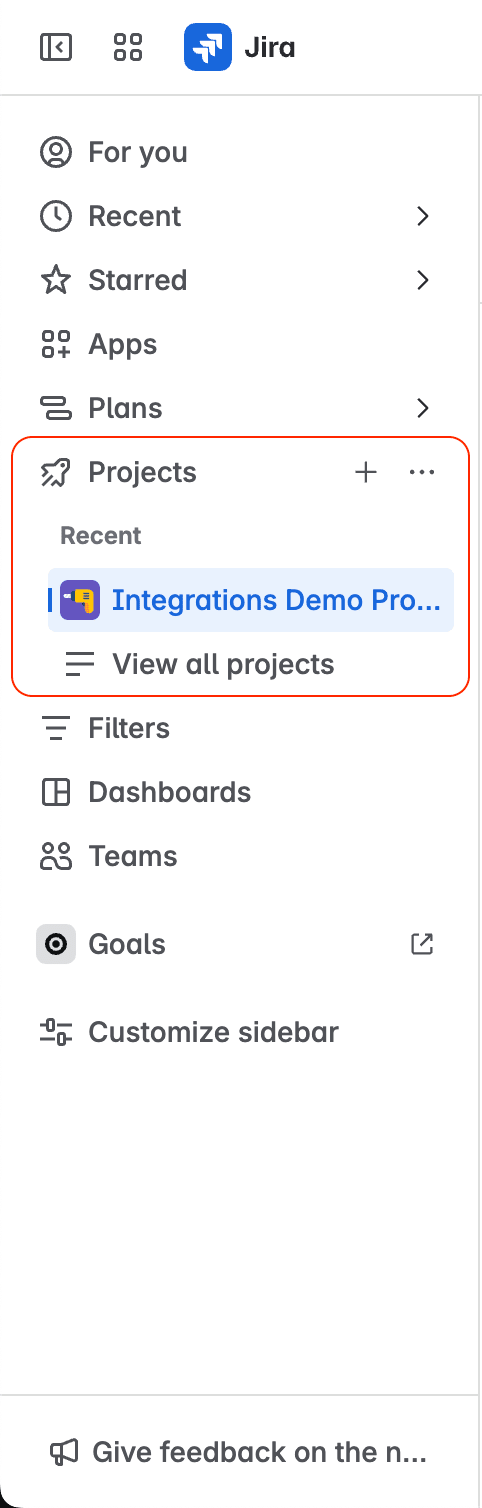
    Open your Jira project to request a Fluid Attacks reattack
  2. Click on the Fluid Attacks option in the project menu.

    Open the Fluid Attacks app on Jira
  3. Find the vulnerability to reattack and click on View.

    Open the Jira issue linked to the vulnerability for Fluid Attacks to reattack
  4. Scroll down the section to the right side to find the Reattack button.

    Find the button in a Jira issue to request a Fluid Attacks reattack
  5. Write the solution given to the vulnerability in the Justification field, then click on Reattack.

    Give a justification to a Fluid Attacks reattack on Jira

You will see the status next to View on platform change from ‘Vulnerable’ to ‘Reattack requested’. If your fix was successful, a comment will be posted on the issue so that everyone watching the issue is notified.

Reattacks performed by Fluid Attacks’ hacking team are subjected to the Fluid Attacks response service-level agreement . To learn about reattack outcomes and what to do in case of an error while submitting your request, read the article Verify fixes with reattacks .

Reattack outcome not what you expected? Learn how Fluid Attacks can help you fix your code .

Search for vulnerabilities in your apps for free with Fluid Attacks’ automated security testing! Start your 21-day free trial  and discover the benefits of the Continuous Hacking  Essential plan . If you prefer the Advanced plan, which includes the expertise of Fluid Attacks’ hacking team, fill out this contact form .

Vulnerability detailsHelp options

Fluid Attacks 2026. All rights reserved.